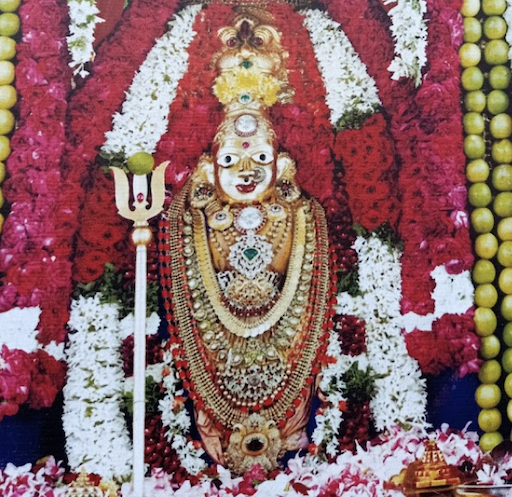
The Jyotirlinga–Shakti Peetha Confluence
Among all the sacred kshetras of Sanatana Dharma, Srisailam holds an unparalleled
distinction: it is the only place in Bharat where a Jyotirlinga of Shiva and a Maha
Shakti Peetha of the Devi share a single temple complex. The Mallikarjuna sanctum and
the Bhramaramba sanctum stand within walking distance of each other inside the same
fortified prakara. Devotional logic suggests that here, the seeker need not choose
between Shiva and Shakti — for She and He are visibly, geographically, ritually
inseparable.
The Sri Chakra Geometry
The architects of the temple, especially during the Vijayanagara restoration,
arranged the Bhramaramba sanctum as a manifest Sri Chakra — the ninefold
diagram of triangles within squares within circuits, beloved of Sri Vidya practice.
The sanctum's central peetham aligns with the bindu — the cosmic point — while
successive enclosures correspond to the chakras of the diagram. Aspirants of Sri Vidya
consider darshan here equivalent to circumambulating the Devi's cosmic Sripuram itself.
The Patalaganga Snan
Below the temple plateau, accessed by a long descent, the Krishna river flows
through a narrow gorge known as Patalaganga — the Ganga of the underworld.
Pilgrims descend the steps, take a sankalpa snan, and ascend to the temple. The
significance is profound: the river that here flows below the earth is, in tradition,
none other than the celestial Ganga herself, returning to the world to purify those
who would behold the Devi.
Adi Shankara's Bhramaramba Ashtakam
The Acharya's eight verses to Bhramaramba — composed at this very kshetra — are
among the most powerful Devi stotras in the Saiva‑Shakta corpus. The first verse
reads:
"Kachit kalakuta — kalanjana — kandalena
sankleshakari — vimala — sphuradangakaanteh
Vakye sada vikasitam priyamarvinda —
bhramara — gaur — vapusham bhramaram bhajami."
— "I worship the bee‑hued, ever‑blooming Mother, whose body shines black like
a fresh kohl, slayer of grief, beloved of the lotus, eternally radiant in the
speech of the wise."
The Sannidhanam of Saints
Beyond the founding sages, the kshetra has been hallowed by the sojourns of
countless saints across centuries — Akka Mahadevi the Veera Shaiva sant‑poet,
Allama Prabhu, Basaveshwara, Sarvajna, Sripada Sri Vallabha, Bhakta Kannappa, and
in modern times the Paramacharya of Kanchi and the Kavi Sannidhanam of Sringeri.
Each has visited, sung and meditated upon the bee‑Mother and the moonlight‑Lord
of the Sri Shaila.
The Phalashruti
The Skanda Purana's Sri Shaila Khanda closes with the Phalashruti — the
fruit of pilgrimage to this kshetra. Whoever, with devotion, beholds the Mallikarjuna
Linga and the Bhramaramba Devi, who bathes in the Patalaganga and circumambulates
the temple, attains moksha — the highest liberation, beyond rebirth. There
is no rite of expiation, the Purana declares, that exceeds the merit of a single
sincere darshan at Sri Shaila.
জ্যোতির্লিঙ্গ–শক্তিপীঠ সঙ্গম
সনাতন ধর্মের সমস্ত পবিত্র ক্ষেত্রের মধ্যে শ্রীশৈলম্‑এর এক অতুলনীয় বৈশিষ্ট্য — এটিই ভারতবর্ষের একমাত্র
স্থান যেখানে শিবের একটি জ্যোতির্লিঙ্গ এবং দেবীর একটি মহাশক্তিপীঠ একই মন্দির প্রাঙ্গণে অবস্থান করে।
মল্লিকার্জুন গর্ভগৃহ ও ভ্রমরাম্বা গর্ভগৃহ একই দুর্গপ্রাকারের মধ্যে পাশাপাশি দাঁড়িয়ে। ভক্তিতত্ত্ব ইঙ্গিত
দেয় — এখানে সাধককে শিব ও শক্তির মধ্যে বেছে নিতে হয় না, কারণ তিনি ও তিনি — দৃশ্যত, ভৌগোলিকভাবে,
আচার‑আচরণে — অবিচ্ছেদ্য।
শ্রী চক্র জ্যামিতি
মন্দির স্থপতিরা — বিশেষত বিজয়নগর সংস্কারকালে — ভ্রমরাম্বা গর্ভগৃহ এক প্রকট শ্রী চক্র রূপে
বিন্যস্ত করেন — শ্রী বিদ্যার প্রিয় নবমুখী চক্রবৃত্ত। গর্ভগৃহের কেন্দ্র পীঠ মেলে বিন্দু‑র সঙ্গে, এবং
ক্রমিক প্রাকার মেলে চক্রের চক্রসমূহের সঙ্গে। শ্রী বিদ্যার সাধকগণ এখানের দর্শনকে দেবীর মহাজাগতিক
শ্রীপুরম প্রদক্ষিণের সমকক্ষ মানেন।
পাতালগঙ্গা স্নান
মন্দির মালভূমির নীচে — দীর্ঘ অবরোহণের পর — কৃষ্ণা নদী প্রবাহিত হয় এক সরু গিরিখাত দিয়ে,
যা পাতালগঙ্গা — পাতালের গঙ্গা — নামে পরিচিত। তীর্থযাত্রী সিঁড়ি বেয়ে নামেন, সংকল্প স্নান
করেন, ও পুনরায় মন্দিরে আরোহণ করেন। এর মাহাত্ম্য গভীর: যে নদী এখানে ভূগর্ভে প্রবাহিত — পরম্পরা
অনুসারে সে‑ই দিব্যা গঙ্গা স্বয়ং, যিনি দেবী‑দর্শনার্থীদের পবিত্র করার জন্য পৃথিবীতে ফিরে এসেছেন।
আদি শঙ্করের ভ্রমরাম্বা অষ্টকম্
এই ক্ষেত্রেই রচিত আচার্যের ভ্রমরাম্বার প্রতি অষ্ট শ্লোক — শৈব‑শাক্ত পরম্পরায় সর্বাধিক শক্তিশালী
দেবী স্তোত্রসমূহের একটি। প্রথম শ্লোক:
"কচিত্ কালকূট‑কলঞ্জন‑কন্দলেন
সংক্লেশকারী‑বিমল‑স্ফুরদঙ্গকান্তেঃ
বাক্যে সদা বিকসিতং প্রিয়মরবিন্দ‑
ভ্রমর‑গৌর‑বপুষং ভ্রমরং ভজামি।"
সন্তগণের সন্নিধানম্
প্রতিষ্ঠাকারী ঋষিগণ ছাড়াও — শতাব্দীর পর শতাব্দী ধরে অসংখ্য সন্ত এই ক্ষেত্র পবিত্র করেছেন —
বীরশৈব সন্ত‑কবি অক্কা মহাদেবী, অল্লম প্রভু, বসবেশ্বর, সর্বজ্ঞ, শ্রীপাদ শ্রী বল্লভ, ভক্ত কন্নাপ্পা; এবং
আধুনিক যুগে কাঞ্চীর পরমাচার্য ও শৃঙ্গেরীর কবি সন্নিধানম্। প্রত্যেকেই শ্রী শৈলের ভ্রমর‑মাতা ও
জ্যোৎস্না‑প্রভু‑কে দর্শন, গান ও ধ্যান করেছেন।
ফলশ্রুতি
স্কন্দ পুরাণের শ্রী শৈল খণ্ড ফলশ্রুতি দিয়ে সমাপ্ত — এই ক্ষেত্র তীর্থের ফল। যিনি ভক্তিতে
মল্লিকার্জুন লিঙ্গ ও ভ্রমরাম্বা দেবী দর্শন করেন, পাতালগঙ্গায় স্নান করেন ও মন্দির প্রদক্ষিণ করেন —
তিনি প্রাপ্ত হন মোক্ষ — পরম মুক্তি, পুনর্জন্মের ঊর্ধ্বে। পুরাণ বলছে — শ্রী শৈলে এক আন্তরিক
দর্শনের পুণ্যকে অতিক্রম করে এমন কোনো প্রায়শ্চিত্ত আচার নেই।